

If you ask most business owners what software their “IT” company installs on their computers, they cannot tell you. You hire a Managed Service Provider (MSP) to keep your network running, maintain backups, and block intrusions. You trust that their tools protect your business.
One option widely used across the managed “IT” industry is N-able’s N-central. It is a Remote Monitoring and Management (RMM) platform designed to let technicians manage hundreds of client networks from a single control screen.
Over recent months, N-central has faced an intense wave of critical vulnerabilities and emergency updates. The flaws allowed unauthorized attackers to bypass authentication entirely, take administrative control of management servers without credentials, and access client devices directly.
In the cybersecurity community, official vendor breach notices often lag weeks behind live activity. While corporate PR pages and status boards list routine version upgrades, incident responders and system administrators on the ground have faced repeated emergency weekend directives to isolate or shut down internet access to on-premises N-central servers.
How Remote Management Software Creates a Supply-Chain Risk
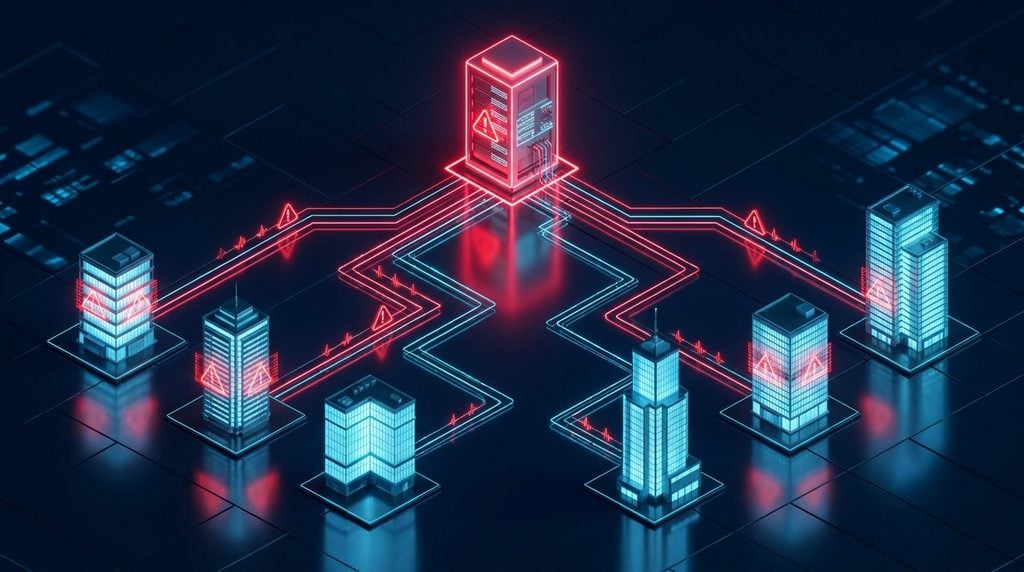
An RMM tool is essentially a permanent, privileged gateway into your entire technical infrastructure.
When an MSP sets up your environment, they place an agent on every server, workstation, and laptop. That software runs with complete administrative permissions (SYSTEM privileges in Windows). It can read local files, execute custom scripts, install programs, and take remote control of active screens.
Those local agents communicate continuously with the MSP’s central management console. If an attacker breaches an employee’s laptop, the damage is usually isolated to that single computer. But if an attacker compromises the central RMM console, they gain direct administrative access to every client network attached to it.
This is what makes “IT” service tools high-value targets for ransomware syndicates. A single compromised management console provides a direct pipeline into the workstations, laptops, and networks of dozens or hundreds of businesses at once.
The Anatomy of the Vulnerabilities
The situation escalated dramatically when independent security researcher Sean Bales publicly released an exploit repository dubbed “Able2Shell” on GitHub. The disclosure revealed 33 uncoordinated zero-day vulnerabilities verified against N-central Appliance version 2026.4.0.31, giving attackers full functional exploit chains before patches were available. Threat researchers documented several critical attack mechanisms:
- The 33 zero-day “Able2Shell” exploit chain: Chaining XML External Entity (XXE) injection, directory traversal, credential leakage, and authentication bypass flaws to achieve unauthenticated root-level remote code execution.
- Pre-authentication remote code execution (CVE-2026-86218): Rated with a maximum CVSS score of 10.0, this flaw enabled attackers to run arbitrary system commands directly on the host server.
- Persistent tunnel backdoors: In documented incidents, attackers installed Cloudflare tunnels (cloudflared) on compromised systems. This gave threat actors a persistent communication channel into managed endpoints, remaining active even if the main console password was changed.
- Unauthorized administrative accounts: Attackers created hidden administrative users to maintain access across subsequent patch cycles.
Why Status Pages Don’t Tell the Whole Story
Software vendors rarely announce active security emergencies on public marketing pages while incidents are unfolding. For instance, status updates in early November documented routine component releases, such as Web Protection Agent 6.0.1 and Risk Intelligence 16.4.
The severity of the Able2Shell disclosure forced unprecedented action: N-able took its own Hosted N-central Cloud environments completely offline worldwide across the Americas, Europe, and APAC while scrambling to deploy emergency hotfixes. At the same time, incident responders urged on-premises operators to disconnect or shut down their management servers immediately. System administrators in technical forums (including Reddit’s r/msp community) coordinated emergency containment, while regulators like the New York State Department of Financial Services (DFS) issued formal threat alerts advising organizations to audit third-party IT providers.
For business leaders, relying solely on whether a vendor has officially confirmed a breach is a flawed security strategy. The question is whether your specific provider has properly hardened, patched, and audited their systems.
Questions to Ask Your “IT” Provider Right Now
You do not need deep technical expertise to protect your organization. Contact your IT provider or account manager today and ask these specific questions:
- 1. ‘Does our environment rely on N-able N-central, and were our systems affected during the recent emergency shutdown?’
- 2. ‘Is our management console hosted in the vendor’s cloud or on your own private infrastructure?’
- 3. ‘If you run an on-premises management console, has it been patched with the emergency hotfixes addressing the 33 Able2Shell zero-day vulnerabilities?’
- 4. ‘Have you audited your management console and our endpoints for unexpected administrative accounts, rogue scripts, or unauthorized Cloudflare tunnel services?’
- 5. ‘Is access to your central management console restricted behind a private VPN or strict IP allowlist, or is it exposed directly to the public web?’
The Bottom Line
Your cybersecurity is only as resilient as the third-party software managing your network. If your IT provider operates with disciplined hygiene, applies security updates immediately, and isolates their tools behind private networks, your exposure is minimal. But if they run unpatched tools exposed to the open internet, their vulnerability becomes your breach.
Frequently Asked Questions
Q: What is the difference between cloud-hosted and on-premises N-central?
A: Cloud-hosted instances (N-able Cloud or NCOD) are managed directly by N-able, while on-premises instances are installed on private servers managed by the MSP. However, during the Able2Shell event, the threat was so severe that N-able took its hosted cloud completely offline worldwide to protect environments, demonstrating that cloud hosting alone does not prevent emergency zero-day downtime.
Q: What should we do if our MSP confirms they had an unpatched on-premises server?
A: Request a formal compromise assessment. The MSP should examine server access logs, audit all scheduled scripts, verify that no unauthorized user accounts exist, and scan client endpoints for persistent tools like unauthorized Cloudflare tunnels.
Level5 Management provides South Florida businesses with proactive IT services, strict multi-layered security controls, and transparent infrastructure management. If you want a second opinion on the security posture of your current provider, contact our team today.
